
Retinal Tears and Holes
The retina is a thin layer, like wallpaper, lining the back of the eye. Retinal tears can occur when stress is placed on it, such as trauma or when the vitreous, a gel-like substance in the eye, separates from the retina – a normal physiologic change with age. The retina can also have holes. Retinal holes can be related to trauma or lattice degeneration, known as weakening at the edges of the retina, which can be congenital or genetic.
A retinal tear, if left untreated, could result in a retinal detachment. This occurs when watery fluid from the vitreous space passes through the hole or tear and flows between the retina and the back wall of the eye. This separates the retina from the back of the eye, causing it to detach. If the retina detaches, the tissue is no longer able to transmit light images to the brain. This results in blurred vision, a blind spot or permanent loss of vision, depending on severity.
Retinal Tear Symptoms
While some retinal tears or holes are asymptomatic, warning signs that you have have a retinal tear or hole include: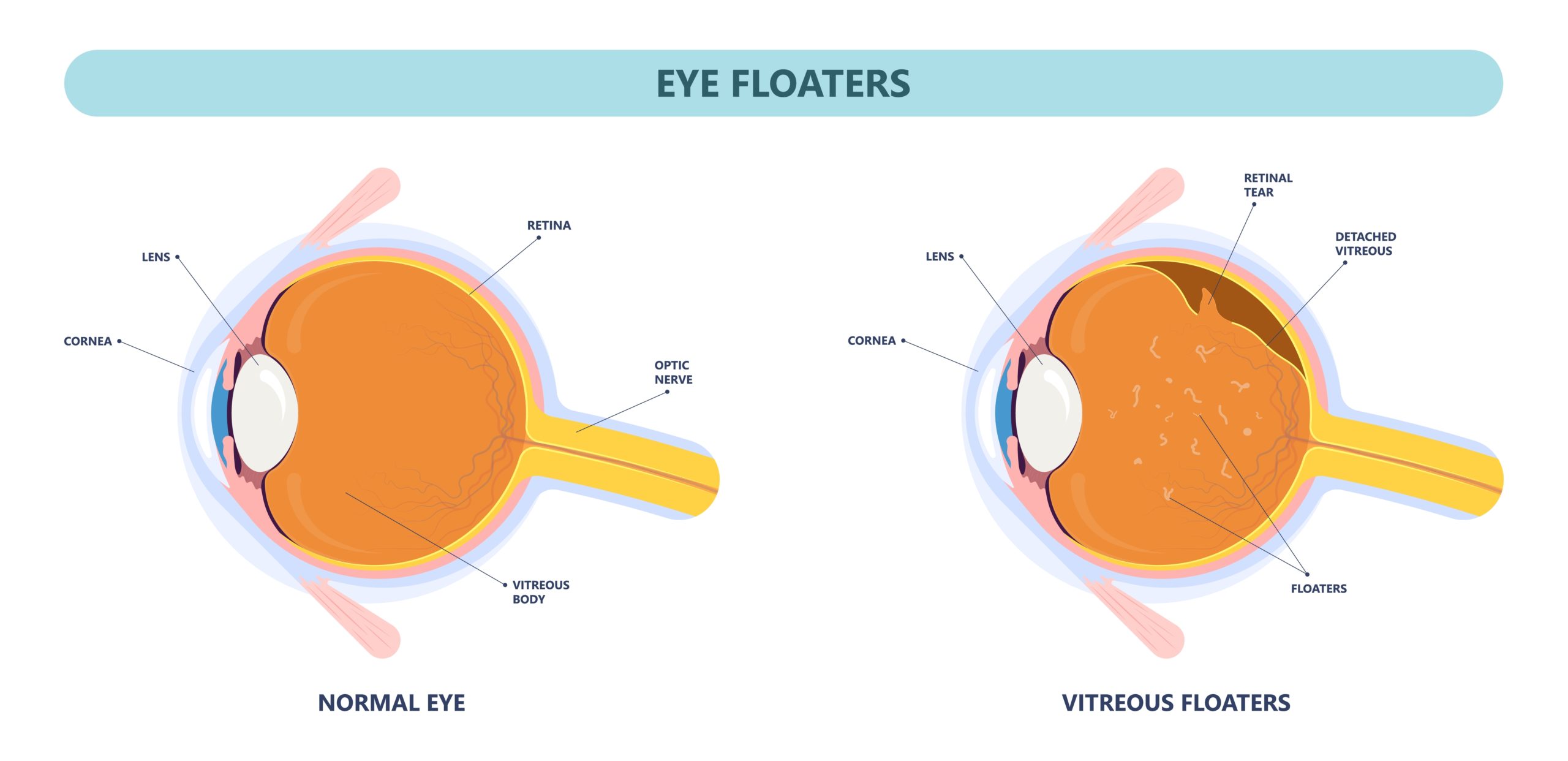
- New floaters – black spots, lines, cobwebs that float in your vision
- Flashing lights
- Curtain in blocking a part of your vision
If these symptoms are new, we recommend a dilated eye exam as soon as possible. Treatment in many cases can prevent progression of a tear to a detachment.
Retinal Tears and Holes Treatment
Retinal tears need to be treated with laser surgery, which creates small burns around the tear. Eventually, these burns become small scars and barricade the tear from enlarging. During the procedure, you may see several bright flashing lights.
It is advisable to bring someone to drive you home after the procedure, as your vision will be temporarily blurry for up to 30-60 minutes post-procedure.

Retinal Tears and Holes FAQs
What causes retinal tears and holes?
Retinal tears and holes often happen when the vitreous gel inside the eye pulls on the retina. Risk factors include aging, high myopia, eye injuries, and certain inherited retinal conditions.
Can retinal tears and holes be prevented?
You can’t always prevent them, but protecting your eyes from trauma, managing myopia, and getting regular eye exams can lower your risk and catch problems early.
When should I see a doctor for a retinal tear or hole?
See an eye doctor immediately if you notice sudden flashes, new floaters, or a curtain-like shadow over your vision. Prompt evaluation can prevent serious complications like retinal detachment.
What’s the difference between a retinal tear and a retinal detachment?
A retinal tear is a break in the retina, while a retinal detachment occurs when the retina pulls away from the back of the eye. Tears can lead to detachment if left untreated.
Can retinal tears or holes heal on their own?
Small retinal holes sometimes remain stable, but tears usually need treatment. Untreated tears can progress to retinal detachment, so early detection and treatment are important.